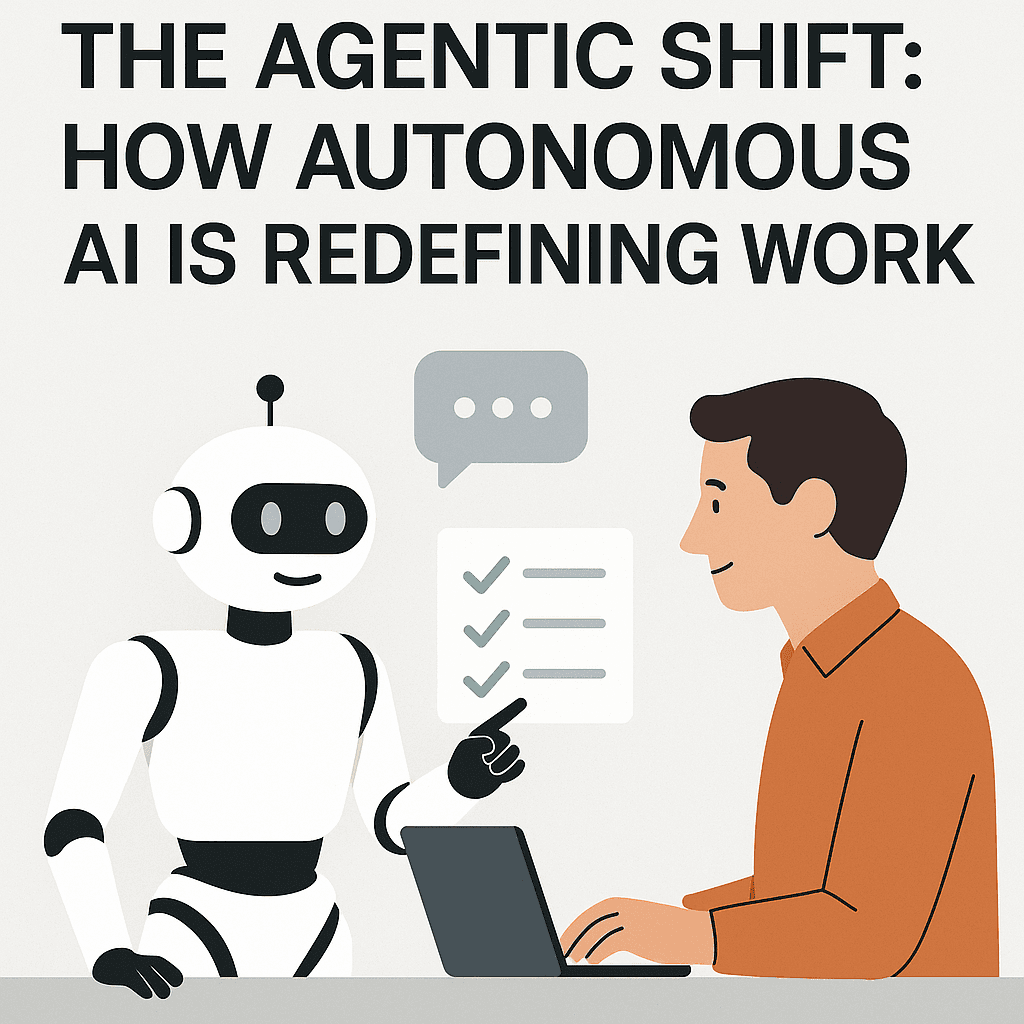
For years, using AI meant asking a question and getting an answer. You type a message, a chatbot replies. You upload an image, a model labels it. Useful, but passive, it waits for you to tell it exactly what to do.
Agentic AI is the shift away from that. Instead of just answering, an AI agent can be given a goal and go figure out the steps needed to get there on its own.
So What Is an AI Agent, Really?
An AI agent is a system that can:
- Perceive: take in information, from a user, an API, a database, or a webpage.
- Reason: use a language model as its "brain" to break a goal down into smaller steps. Ask it to "find the cheapest flight to London next week and summarize the options," and it can plan out how to do that.
- Act: actually carry out those steps using tools, a web search, an email client, a database, a custom API, whatever the task requires.
Think of it less like a calculator and more like an assistant you can hand a goal to, instead of a list of exact instructions.
When Multiple Agents Work Together
Things get more interesting when several agents specialize and collaborate:
- A research agent gathers raw information.
- A data agent cleans it up and pulls out the useful parts.
- A writer agent turns those insights into a draft.
- A review agent checks the draft before it goes out.
That's a small, automated pipeline handling a task that would otherwise need several people and a lot of back and forth.
Where This Actually Helps a Business
- Customer support that does more than answer FAQs. An agent can check an order status, see it's delayed, apply a discount code, and update your records, without a human touching it.
- Research and reporting on autopilot. Point an agent at "analyze our top 5 competitors' pricing and features" and get back a structured summary instead of doing it by hand.
- Monitoring that takes action. Instead of just sending an alert when something breaks, an agent can attempt a fix first, like restarting a service, and only escalate to a person if it can't resolve it.
The real value of agentic AI isn't that it's futuristic. It's that it turns "I wish someone had time to do this" tasks into things that just happen automatically.
Is It Right for Every Business?
Not every problem needs a multi-agent system, and it's worth being honest about that. A single, well-built chatbot or a simple automation is sometimes the better, cheaper answer. Agentic setups make the most sense when a task genuinely involves multiple steps, multiple data sources, or decisions that would otherwise eat up real staff time every week.
The goal is always the same: combine the 'Aql' (the thinking, the planning) with the 'Agility' (the fast, working execution) so the result is something that actually runs in your business, not just something that looks impressive in a demo.